
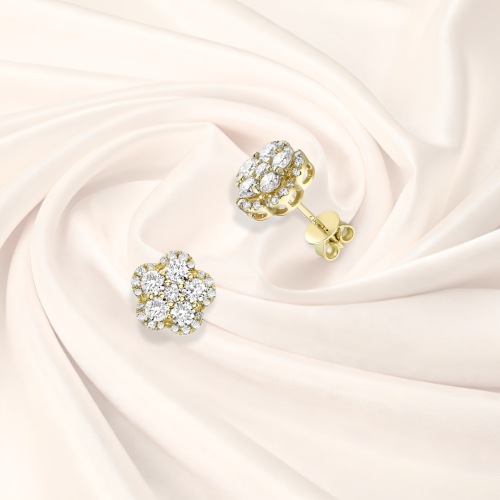

The rise of lab-grown diamonds has reshaped the jewelry landscape over the past decade. Their appeal is understandable: visually identical to natural diamonds, accessible price points, and modern technology capable of producing high clarity and high color at scale. But as the market matures, so does the conversation around long-term value, rarity, desirability, and the factors that distinguish natural diamonds from everything else in the category.
This is not about disparaging lab-grown diamonds. They serve a real purpose—much like CZ and moissanite became permanent fixtures in jewelry decades ago, lab-grown diamonds are here to stay. Instead, this is a clear, educational look at why natural diamonds continue to hold their position as the world’s most enduring gemstone and why their investment value and long-term desirability remain unmatched.
The Appeal of Lab-Grown Diamonds: Why They Took Off
Lab-grown diamonds gained traction for several important reasons:
-
They offer high color and clarity at a lower price.
-
They provide an accessible option for customers wanting a larger stone.
-
They appeal to buyers who appreciate technological innovation.
-
They align with the desire for budget-friendly luxury.
However, as production technology improves, lab-grown diamonds have become easier and cheaper to manufacture, leading to an oversupply in the global market.
This oversupply is the root of the biggest challenge with lab-grown diamonds: the rapid decline in long-term value, which has shifted perception from “affordable alternative” to “noninvestment fashion diamond.”
Why the Market Value of Lab-Grown Diamonds Has Declined
Unlike natural diamonds—which took up to 3 billion years to form—lab-grown diamonds can be produced at scale in weeks. And as more facilities worldwide adopt advanced HPHT and CVD technology, production continues to increase.
What this means:
-
Prices of lab-grown diamonds continue to fall year over year.
-
What once cost thousands now costs a fraction.
-
Wholesale values change so quickly that retailers cannot treat them like long-term assets.
-
Customers who purchased early have seen their investment value diminish sharply.
This is not a flaw of lab-grown diamonds—it is simply the nature of a man-made product that can be replicated endlessly. As output grows, prices will continue to adjust downward until they reach equilibrium similar to CZ or moissanite: permanent but not value-appreciating.
Natural Diamonds: The Power of Rarity
Natural diamonds derive their value from one irreplaceable factor: true geological rarity. No factory can replicate the timeline or conditions that formed natural diamonds deep within the Earth.
Key points that set natural diamonds apart:
-
Each natural diamond is a finite resource—once mined, it cannot be replaced.
-
Geological formation took billions of years, making each one a preserved piece of Earth’s history.
-
High-quality natural diamonds maintain strong secondary-market demand.
-
They are viewed as long-term assets, not just accessories.
This scarcity is foundational to their buying power, heirloom value, and enduring emotional significance.
Investment Value: Natural vs. Lab-Grown
The market treats natural and lab-grown diamonds very differently.
Natural diamonds:
-
Hold long-term value
-
Maintain stable resale potential
-
Are viewed as multi-generational heirlooms
-
Appreciate in certain size/quality categories due to scarcity
Lab-grown diamonds:
-
Are valued as fashion purchases, not investments
-
Depreciate as manufacturing improves
-
Have little to no resale market
-
Function similarly to CZ or moissanite—beautiful, wearable, affordable
Again, this doesn’t make lab-grown diamonds “bad.” It means they serve a completely different purpose in the jewelry ecosystem.
Emotional and Cultural Significance
For centuries, natural diamonds have symbolized:
-
permanence
-
commitment
-
rarity
-
authenticity
-
generational continuity
Engagement rings made with natural diamonds carry emotional weight beyond aesthetics. Families pass them down for decades because they represent something irreplaceable, both physically and emotionally.
Lab-grown diamonds, while beautiful, do not offer the same sense of permanence or rarity. They serve as modern, stylish, accessible alternatives—but they do not carry the same symbolic or historical significance.
Environmental and Ethical Nuance
A common perception is that lab-grown diamonds are always the more environmentally responsible choice. While they avoid mining, the energy requirements to grow diamonds—especially through HPHT—can be extremely high.
Conversely, the natural diamond industry has evolved dramatically, with large-scale initiatives in:
-
ethical sourcing
-
community investment
-
land reclamation
-
wildlife preservation
-
traceability and transparency
Both categories have strengths and tradeoffs. The key is informed purchasing, not assumptions.
Why the Trend Is Real — But Temporary
Lab-grown diamonds surged due to:
-
lower pricing
-
high availability
-
attractive size-to-value ratio
-
social media amplification
But as prices continue dropping and the novelty wears off, lab-grown diamonds will likely settle into the same position CZ and moissanite occupy—a permanent, valid alternative, but not the standard.
Natural diamonds will remain the benchmark for value, luxury, and legacy.
The Timelessness of Natural Diamonds
The enduring appeal of natural diamonds comes down to three pillars:
Rarity
A natural diamond is a geological miracle—impossible to replicate in nature’s exact form.
Value
Natural diamonds remain one of the few luxury items that consistently retain and often appreciate in value.
Legacy
They are heirlooms, investments, and symbols passed through generations.
For buyers who want timelessness, emotional significance, and long-term value, natural diamonds remain unparalleled.
Gili’s Final Take
Lab-grown diamonds are beautiful, accessible, and absolutely here to stay. They offer a stunning alternative for customers who want brilliant sparkle at an approachable price.
But natural diamonds occupy a category all their own: rare, enduring, historically significant, and unmatched in lasting value. Trends may shift, prices may fluctuate, and technologies may evolve—but natural diamonds remain the definitive choice for those who want meaning, investment, and authenticity woven into every piece of jewelry.