


Gold Is Having a Moment — Again
In early 2026, gold prices surged past $3,100 per troy ounce — shattering previous records and reigniting a global conversation about gold as a safe-haven asset. Driven by geopolitical uncertainty, persistent inflation concerns, and central bank buying at historic levels, gold has reasserted itself as one of the most reliable stores of value in the world.
For jewelry buyers, this creates a fascinating opportunity: fine gold jewelry isn't just beautiful — it's a tangible, wearable asset that holds and often appreciates in value over time. At Gili Jewels, we believe understanding the investment dimension of fine jewelry makes you a smarter, more confident buyer. Here's everything you need to know.
Why Gold Has Always Been a Store of Value
Gold has been used as currency and a store of wealth for over 5,000 years. Unlike paper currency, which can be printed in unlimited quantities, gold is finite — there's only so much of it in the earth. This scarcity is the foundation of its enduring value.
Key reasons gold retains value over time:
- Scarcity: Total gold ever mined would fit in roughly 3.5 Olympic swimming pools. Annual new supply is limited.
- Universal acceptance: Gold is recognized and valued in every country on earth.
- Inflation hedge: Historically, gold maintains purchasing power even as paper currencies lose value to inflation.
- Crisis resilience: During economic downturns, geopolitical crises, and market crashes, gold typically holds or increases in value while other assets fall.
- No counterparty risk: Unlike stocks or bonds, physical gold doesn't depend on any company or government to maintain its value.
Gold Price Performance: A Brief History
To understand gold's investment potential, consider its price trajectory:
- 2000: ~$270 per troy ounce
- 2008 (financial crisis): Gold surged as markets collapsed
- 2011: ~$1,900 per troy ounce (then-record high)
- 2020 (COVID-19 pandemic): ~$2,070 per troy ounce (new record)
- 2024: ~$2,400 per troy ounce
- Early 2026: $3,100+ per troy ounce
Over 25 years, gold has increased in value by more than 1,000%. Few asset classes can match that long-term performance.
Gold Jewelry vs. Gold Bullion: What's the Difference?
When people think of investing in gold, they often think of gold bars or coins (bullion). But fine gold jewelry offers a compelling alternative — with unique advantages.
Gold Bullion (Bars and Coins):
- Pure investment vehicle — no aesthetic value
- Typically 24K (99.9% pure gold)
- Easy to price based on spot gold price
- Requires secure storage
- No utility beyond investment
Fine Gold Jewelry:
- Wearable, beautiful, and emotionally meaningful
- Typically 14K–18K gold (58–75% pure gold)
- Value includes both gold content and craftsmanship
- Can be passed down as heirloom pieces
- Dual purpose: investment + enjoyment
- Easier to liquidate in smaller amounts than large bullion bars
The key difference: bullion is priced purely on gold content. Fine jewelry carries a premium for design, craftsmanship, and brand — but also offers the joy of wearing your investment every day.
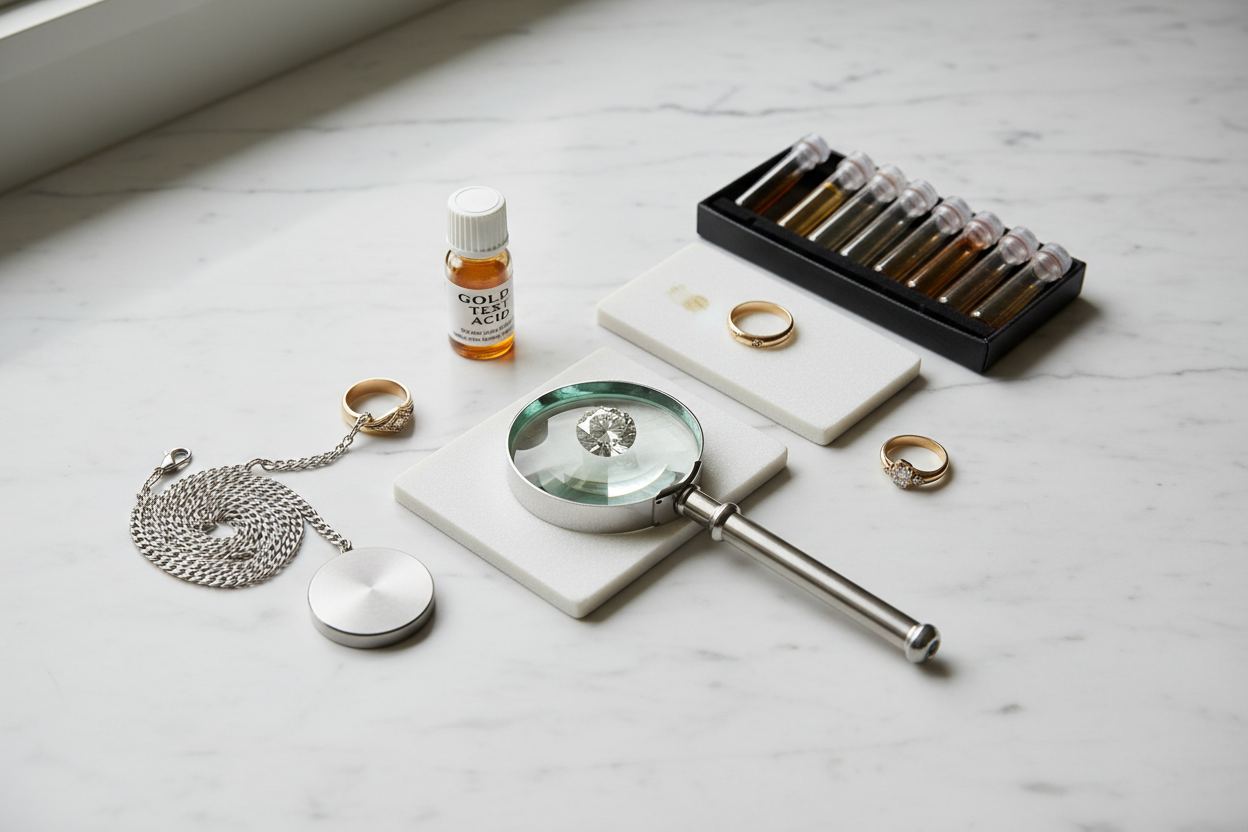
How to Calculate the Gold Value in Your Jewelry
Understanding the intrinsic gold value of a piece is straightforward:
- Find the karat: Check the hallmark (14K = 58.3% gold, 18K = 75% gold)
- Weigh the piece: In grams
- Convert to troy ounces: Divide grams by 31.1
- Multiply by gold purity: e.g., 18K = 0.75
- Multiply by current spot gold price
Example: An 18K gold necklace weighing 10 grams:
10 ÷ 31.1 = 0.322 troy oz × 0.75 = 0.241 troy oz of pure gold
At $3,100/oz: 0.241 × $3,100 = ~$748 in gold content alone
This is the "melt value" — the minimum intrinsic worth of the piece. Well-crafted fine jewelry from reputable jewelers typically sells for significantly more than melt value due to design and craftsmanship premiums.
Which Gold Jewelry Holds Value Best?
Not all gold jewelry is created equal as an investment. Here's what to look for:
Higher Karat = More Gold Content
18K gold contains 75% pure gold vs. 14K's 58.3%. Higher karat pieces have more intrinsic gold value, though they're also softer and more expensive.
Iconic and Timeless Designs
Classic pieces — simple gold chains, hoop earrings, bangles, solitaire rings — hold value better than highly trendy designs that may fall out of fashion. Timeless pieces remain desirable and resalable across decades.
Reputable Makers and Hallmarked Pieces
Jewelry from established, reputable jewelers with proper hallmarks commands better resale prices. Documentation matters — keep receipts, certificates, and appraisals.
Heavier Pieces
More gold content means more intrinsic value. A substantial 18K gold chain will always have meaningful melt value regardless of design trends.
Signed or Designer Pieces
Jewelry from iconic houses (Cartier, Van Cleef & Arpels, Tiffany, Bulgari) carries significant brand premium and often appreciates beyond gold content alone. Vintage signed pieces in particular have shown strong appreciation.
Gold Jewelry as Generational Wealth
One of the most compelling aspects of fine gold jewelry as an investment is its role in generational wealth transfer. Unlike stocks or real estate, jewelry can be physically passed from parent to child, carrying both monetary value and emotional significance.
In many cultures — South Asian, Middle Eastern, Latin American, and others — gold jewelry has served as the primary vehicle for family wealth preservation for centuries. This isn't superstition; it's a time-tested strategy that has protected families through wars, currency collapses, and economic crises.
A well-chosen piece of fine gold jewelry purchased today could be worth significantly more in 20 years — and carry priceless sentimental value on top of that.
Practical Tips for Buying Gold Jewelry as an Investment
- Buy from reputable jewelers with proper hallmarking and documentation
- Prioritize higher karats (18K or above) for maximum gold content
- Choose timeless designs over trendy pieces for better long-term resale
- Get an appraisal for significant pieces — and update it every few years as gold prices rise
- Keep all documentation: receipts, certificates, appraisals
- Insure your pieces — jewelry insurance is inexpensive relative to the value it protects
- Store properly — well-maintained jewelry retains value better than damaged pieces
- Track gold prices — understanding the spot price helps you recognize good buying opportunities
Frequently Asked Questions About Gold as an Investment
Is gold jewelry a good investment?
Fine gold jewelry can be an excellent investment, particularly 18K and higher pieces from reputable jewelers. It combines intrinsic gold value with craftsmanship premium and the unique benefit of being wearable. It's best viewed as a long-term store of value rather than a short-term trading vehicle.
Why is gold at record highs in 2026?
Multiple factors are driving gold's surge: central bank buying at historic levels (particularly from China, India, and emerging market central banks), geopolitical uncertainty, persistent inflation concerns, and growing demand from investors seeking safe-haven assets amid global economic uncertainty.
How do I sell gold jewelry?
Options include selling to a reputable jeweler or gold buyer, auction houses (for high-value or designer pieces), online marketplaces (eBay, 1stDibs, Worthy), or estate jewelry dealers. Always get multiple quotes and know your piece's melt value before selling.
Does gold jewelry appreciate in value?
The gold content of jewelry appreciates in line with gold prices. Well-crafted pieces from reputable makers can appreciate beyond gold content due to craftsmanship and brand value. Designer and vintage signed pieces have shown particularly strong appreciation.
What karat gold is best for investment?
18K gold (75% pure) offers the best balance of gold content and durability for wearable investment pieces. 22K and 24K are purer but too soft for most jewelry. 14K is more durable but contains less gold.
Final Thoughts: Beauty and Value, Together
In a world of volatile markets and uncertain currencies, gold's 5,000-year track record as a store of value speaks for itself. Fine gold jewelry offers something unique: the ability to hold a tangible, appreciating asset that you can wear, enjoy, and pass on to the people you love.
At Gili Jewels, we're passionate about helping you find pieces that are as meaningful as they are beautiful — and as smart as they are stunning. Whether you're building a collection with investment in mind or simply want to understand the value behind your favorite pieces, we're here to help.
Have questions about the gold content or value of a specific piece? Contact our team — we'd love to help you make the most informed decision possible.