
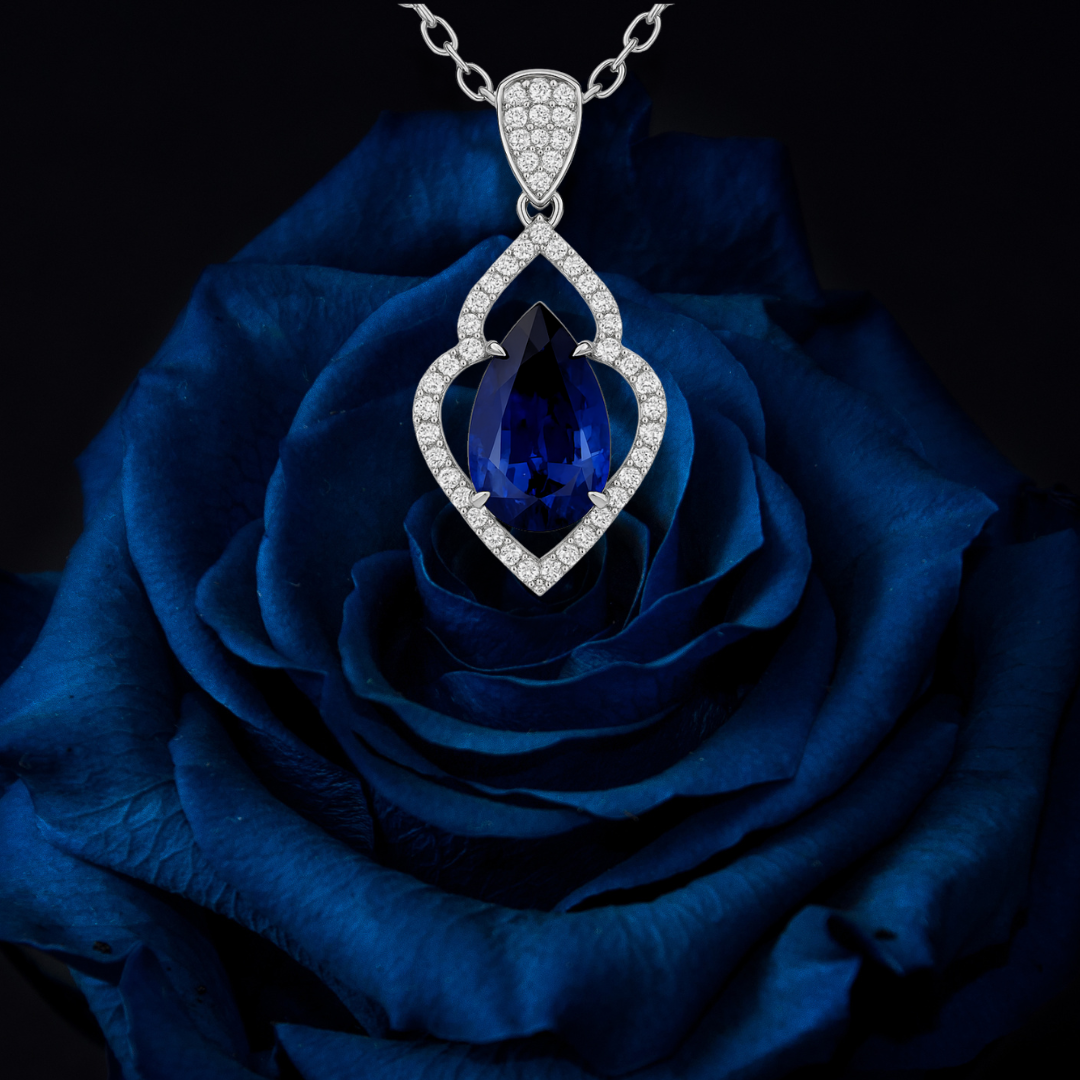


You spent real money on that necklace. It's fine jewelry. It's beautiful. So why does it look... off? Nine times out of ten, it comes down to one thing: you're wearing it wrong. Not the jewelry's fault. Entirely fixable. Let's talk about it.
The Mistake: Wearing Everything at Once With No Intention
The single biggest mistake people make with fine jewelry is treating it like an afterthought — grabbing whatever's on the nightstand and piling it on without thinking about proportion, metal consistency, or neckline. The result? Even a $3,000 necklace can look cluttered and cheap if it's competing with three other pieces for attention.
The good news: this is 100% a styling problem, not a jewelry problem. And styling is learnable.
Fun Fact: Professional stylists on photo shoots spend more time editing jewelry off their subjects than adding it. The rule in fashion is almost always "remove one thing before you leave the house." Coco Chanel allegedly said this first. She was right.
Rule #1: Anchor Your Look With One Statement Piece
Every great jewelry look has a hero piece — one item that does the heavy lifting — and everything else plays a supporting role. If your hero is a bold pendant necklace, your earrings should be small studs. If your hero is dramatic chandelier earrings, skip the necklace entirely or wear a delicate chain that doesn't compete.
Think of it like a dinner party. You don't want five people talking at once. You want one great storyteller and a room full of good listeners.
Examples of hero pieces:
- A chunky gold chain worn alone on a V-neck
- A diamond tennis bracelet with simple stud earrings
- Bold gemstone drop earrings with a bare neck
- A statement cocktail ring with no other hand jewelry
Fun Fact: Audrey Hepburn famously wore a single strand of pearls in Breakfast at Tiffany's — no other jewelry. That image became one of the most iconic style moments in cinema history. Sometimes less really is more.
Rule #2: Neckline Dictates Necklace Length (Always)
This is the rule most people skip, and it makes an enormous difference. The wrong necklace length for your neckline creates visual chaos — the right one frames your face and draws the eye exactly where you want it.
- Crew neck / turtleneck: Long pendant (18–24") or layered chains that fall below the neckline. Avoid chokers — they disappear into the fabric.
- V-neck: A pendant that follows the V shape (16–18") is perfect. It elongates the neck and draws the eye down elegantly.
- Scoop neck: A princess-length necklace (17–19") sits beautifully in the curve. Avoid anything too short — it fights the neckline.
- Off-shoulder / strapless: This is your moment for a statement choker or collar necklace. The bare neck and shoulders are the canvas.
- Plunging neckline: Keep it simple — a delicate chain or nothing at all. The neckline is already doing the work.
- High neck / halter: Skip the necklace entirely and go bold with earrings instead.
Fun Fact: The "princess length" necklace (17–19 inches) is called that because it was the preferred length of European royalty in the 18th and 19th centuries. It sits just below the collarbone — the most universally flattering position for a necklace on virtually any body type.
Rule #3: Mixing Metals Is Fine — But Do It on Purpose
For decades, the "rule" was never mix gold and silver. That rule is dead. Mixing metals is not only acceptable in modern jewelry styling — it's actually very chic when done intentionally. The key word is intentionally.
How to mix metals well:
- Pick a dominant metal and let the other play a supporting role. Two-thirds yellow gold, one-third silver reads as intentional. Fifty-fifty reads as accidental.
- Use a bridge piece — a two-tone ring or a piece that contains both metals — to tie the look together.
- Keep the mixing to one zone. Mixed metals on your wrist stack is fine. Mixed metals on your wrist AND your neck AND your ears starts to look chaotic.
- Rose gold plays well with both yellow gold and silver/white gold. It's the great mediator of the metal world.
Fun Fact: The trend of mixing metals was popularized in the early 2000s by the rise of "stacking" culture — layering multiple thin rings and bracelets across different fingers and wrists. What started as a bohemian street style trend eventually made its way to high fashion runways and is now considered completely mainstream.
Rule #4: Scale Matters More Than You Think
Proportion is everything in jewelry styling. A delicate chain on a petite frame looks elegant. The same chain on a taller, broader frame can look like it's disappearing. A chunky statement cuff on a petite wrist can look overwhelming. Getting scale right is what separates "styled" from "dressed."
General guidelines:
- Petite frames: Lean toward delicate chains, small pendants, and slim stacking rings. Avoid oversized statement pieces that overwhelm your proportions.
- Taller / broader frames: You can carry bolder pieces — chunkier chains, larger pendants, wider cuffs. Delicate pieces can get lost.
- Small wrists: Thin bangles and delicate bracelets. Wide cuffs can slide around and look sloppy.
- Larger hands: Bold cocktail rings look stunning. Tiny rings can look disproportionate.
That said — these are guidelines, not laws. If you love an oversized ring on a petite hand, wear it with confidence. Confidence is the best accessory.
Fun Fact: Knuckle rings — rings worn above the first joint of the finger — became a mainstream trend around 2012–2014. They're a great way to add visual interest to smaller hands without committing to a full-sized statement ring.
Rule #5: The Art of Layering Necklaces
Layered necklaces are one of the most popular jewelry trends of the last decade — and one of the easiest to get wrong. Done well, they look effortlessly editorial. Done poorly, they look like you got tangled in your jewelry box.
The formula for perfect necklace layering:
- Vary the lengths. Each necklace should sit at a distinctly different length — at least 2 inches apart. Choker (14") + princess (18") + matinee (22") is a classic combination.
- Vary the weight. Mix a delicate chain with a slightly chunkier one. All the same weight looks flat; contrast creates visual interest.
- Vary the style. A plain chain + a pendant + a charm necklace creates depth. Three plain chains of different lengths can also work beautifully for a minimalist look.
- Keep metals consistent (or intentionally mixed — see Rule #3).
- Two to three layers is the sweet spot. Four or more starts to look heavy unless you really know what you're doing.
Fun Fact: The necklace layering trend was heavily popularized by celebrities like Rihanna, Beyoncé, and Jennifer Aniston in the mid-2010s. Jewelry brands quickly caught on and started selling "pre-layered" necklace sets — multiple chains attached to a single clasp — so you get the look without the untangling nightmare. Genius.
Rule #6: Match Your Jewelry to the Occasion (Not Just the Outfit)
Fine jewelry has a time and a place — and wearing the wrong piece for the occasion is one of the fastest ways to make expensive jewelry look out of place rather than elevated.
- Casual daytime: Delicate gold chains, small hoops, simple stacking rings. Keep it light and effortless.
- Business / professional: Classic pieces with clean lines — pearl studs, a simple pendant, a thin bangle. Nothing that makes noise or catches light dramatically in a meeting.
- Evening / cocktail: This is your moment for gemstones, statement earrings, and bold pieces. Go for it.
- Black tie / formal: Fine jewelry at its finest — diamonds, pearls, and precious gemstones in elegant settings. Less is more; quality over quantity.
- Beach / outdoor: Leave the fine jewelry at home. Salt water, sunscreen, and sand are not kind to precious metals and stones.
Fun Fact: Salt water is one of the most damaging things for fine jewelry. It can corrode metal settings, loosen prongs, and dull gemstones. Chlorine (in pools) is even worse — it can actually dissolve the alloys in gold, weakening the metal over time. Your jewelry deserves a beach day off.
Quick-Reference Cheat Sheet
- One hero piece, everything else supporting
- Necklace length matches neckline
- Mix metals intentionally, with a dominant metal
- Scale jewelry to your frame
- Layer necklaces at least 2" apart in length
- Match jewelry weight to the occasion
- Don't wear everything at once
- Don't let necklaces compete with each other
- Don't wear fine jewelry to the beach or pool
- Don't ignore proportion — scale matters
The Bottom Line
Expensive jewelry looks cheap when it's worn without intention. The same piece — styled correctly — can look like it belongs on a magazine cover. The difference isn't the jewelry. It's the thought behind how you wear it.
Once you internalize these rules, you'll start seeing them everywhere — in fashion editorials, on red carpets, in street style photography. And you'll never look at a jewelry pile-up the same way again.
Ready to Build Your Perfect Jewelry Wardrobe?
✨ Shop Gili Jewels — fine jewelry designed to be layered, stacked, and styled. From delicate everyday chains to bold statement pieces, we have everything you need to build a collection that works together beautifully.
💌 Join our email list and save 35% on your first order — plus get exclusive styling tips, new arrival alerts, and members-only offers delivered straight to your inbox.
Subscribe here →
📩 Not sure where to start? Our team loves helping customers build a jewelry wardrobe from scratch. Tell us your style, your budget, and your lifestyle — we'll point you in the right direction.
Contact us →