
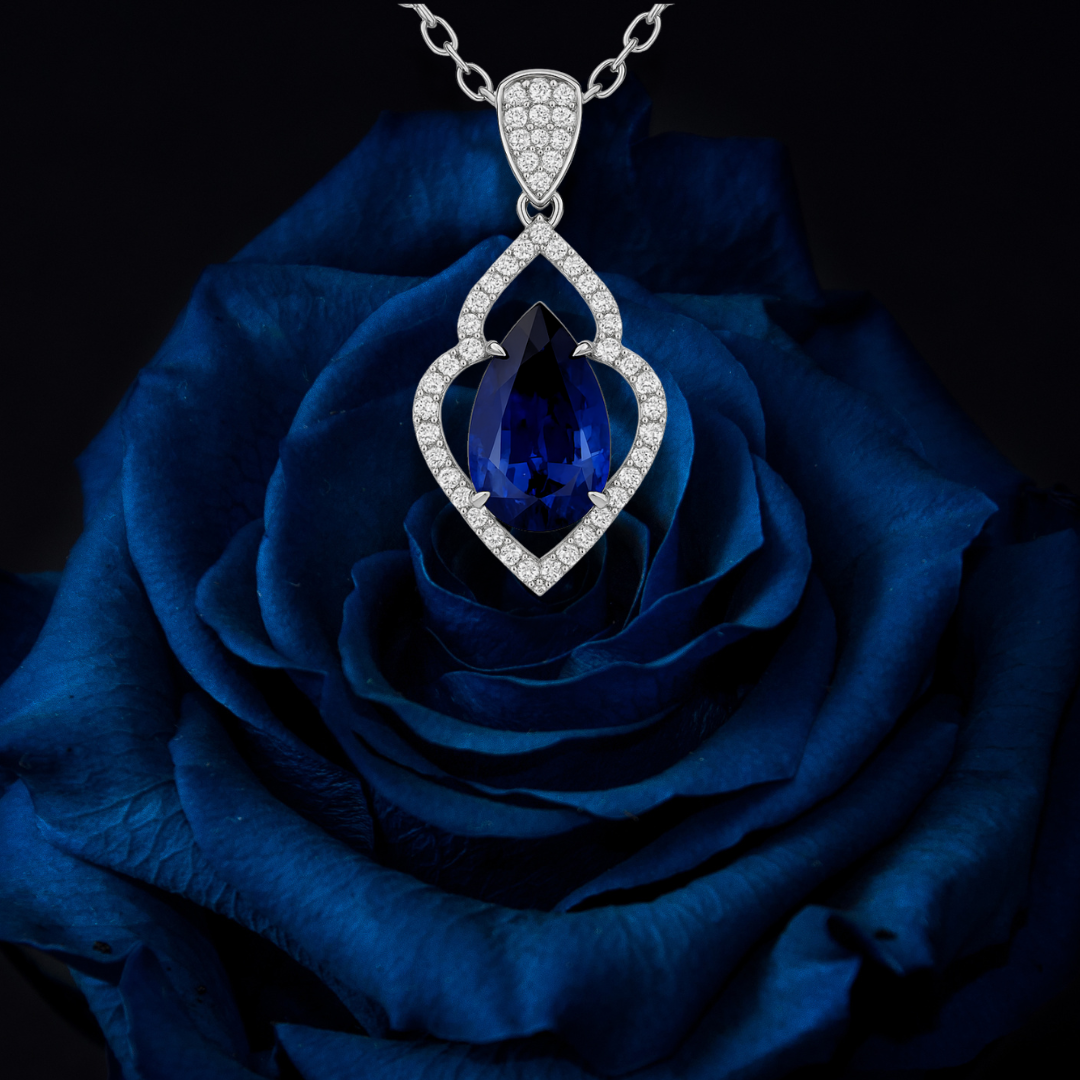


You've worn your birthstone your whole life. You probably have it on a necklace, a ring, maybe a phone case your aunt gave you in 2009. But here's the uncomfortable truth: your birthstone was assigned to you by a committee of jewelry salespeople in 1912. Not ancient mystics. Not the cosmos. Jewelry salespeople.
Let that sink in for a second.
That doesn't mean your stone isn't beautiful or meaningful — it absolutely can be. But the story behind birthstones is way more fascinating (and a little more chaotic) than anyone tells you. So let's dig in.
The Birthstone List Was Literally Invented to Sell More Jewelry
In 1912, the American National Retail Jewelers Association sat down and said, "What if every single person on earth had a specific gemstone they were supposed to buy?" And thus, the modern birthstone list was born.
Before 1912, birthstones were a beautiful, chaotic mess. Ancient Hebrews tied gemstones to the 12 tribes of Israel. Romans had their own system. Hindus had another. Medieval Europeans had yet another. There was no consensus — just vibes, religion, and a lot of regional folklore.
Fun Fact: The concept of birthstones may actually trace back to the Breastplate of Aaron described in the Bible — a ceremonial garment worn by the High Priest of Israel, set with 12 different gemstones representing the 12 tribes. People eventually started associating those 12 stones with the 12 months of the year. It took about 1,500 years for that idea to fully evolve into what we have today.
The list has also been updated multiple times since 1912. Tanzanite was added in 2002. Spinel joined in 2016. So yes — the "ancient" birthstone tradition is younger than sliced bread (which was invented in 1928, for the record).
💎 What Gemstones Actually Meant Before the Marketing Kicked In
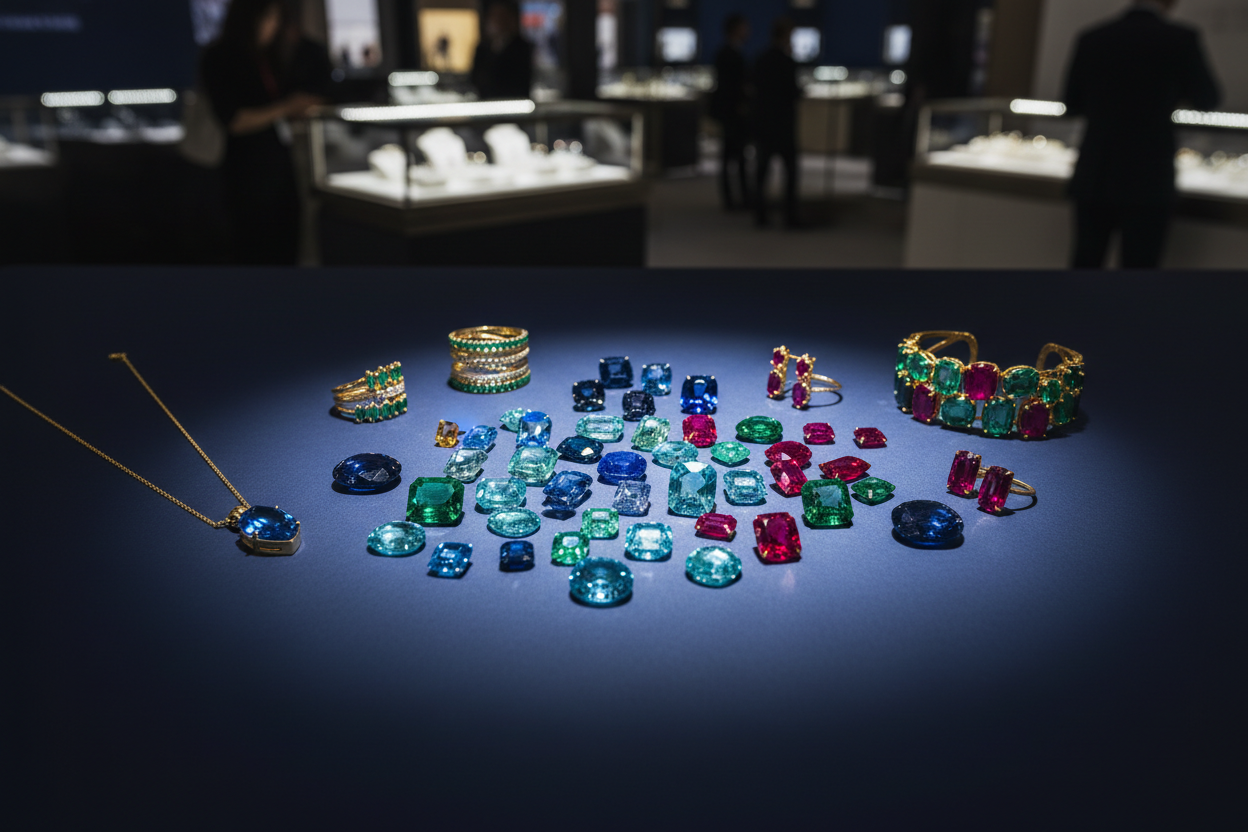
Here's where it gets genuinely fascinating. For thousands of years, people chose gemstones based on their believed powers and symbolism — not their birthday. And some of these beliefs are absolutely wild.
Amethyst — The Ancient Hangover Cure
The ancient Greeks were convinced that amethyst prevented intoxication. The word itself comes from the Greek amethystos, meaning "not drunk." Wealthy Greeks would drink wine from amethyst goblets believing it would keep them sober. (Spoiler: it did not work. But it looked fabulous.)
Fun Fact: Amethyst used to be as valuable as rubies and emeralds. Then massive deposits were discovered in Brazil in the 19th century, and the price crashed overnight. The jewelry world has never fully recovered from the drama.
Garnet — The Warrior's Stone
Medieval knights wore garnets into battle believing the deep red stone would protect them from wounds and light their way in darkness. The Crusaders were particularly fond of garnets. Some historians believe garnets were among the most traded gemstones in the ancient world — found in Egyptian pharaoh tombs, Viking graves, and Anglo-Saxon jewelry.
Fun Fact: Garnet comes in almost every color — including green (tsavorite), orange (spessartite), and even color-changing varieties. The red garnet you know is just one member of a very large, very colorful family.
Sapphire — Not Just for Royalty (But Also Very Much for Royalty)
Sapphires were the stone of divine favor, truth, and loyalty. Medieval clergy wore sapphires to symbolize heaven. Kings wore them to attract blessings and protect against envy. And of course, Prince Charles gave Princess Diana a sapphire engagement ring in 1981 — which Prince William later gave to Kate Middleton, making it arguably the most famous ring in the world.
Fun Fact: The most expensive sapphire ever sold was the "Blue Belle of Asia" — a 392.52-carat Ceylon sapphire that sold at Christie's for $17.3 million in 2014. For context, that's about 17.3 million reasons to love sapphires.
Ruby — The Stone That Was Supposed to Make You Invincible
Ancient Burmese warriors didn't just wear rubies — they embedded them directly into their skin before battle, believing the stones would make them invincible. (This is both extremely metal and extremely not recommended.) In Sanskrit, ruby is called ratnaraj — "king of precious stones."
Fun Fact: The most valuable rubies in the world come from Myanmar (Burma) and are called "pigeon's blood" rubies for their intense, pure red color with a slight blue undertone. A fine Burmese ruby can be worth more per carat than a diamond.
Emerald — Cleopatra's Obsession
Cleopatra was so obsessed with emeralds that she claimed ownership of all emerald mines in Egypt. She gave emeralds as gifts to foreign dignitaries — engraved with her own portrait, because subtlety was not her thing. The ancient Egyptians believed emeralds symbolized fertility and rebirth, and they buried them with mummies as symbols of eternal youth.
Fun Fact: The largest emerald ever found was the "Bahia Emerald" — a single specimen weighing 840 pounds (yes, pounds) and containing an estimated 180,000 carats of emerald crystals. It has been the subject of multiple lawsuits, a theft, and a Hurricane Katrina survival story. It's basically a soap opera in rock form.
Pearl — Tears of the Gods (and Also Dissolved in Vinegar)
Pearls have been considered sacred across almost every ancient culture. In Hindu mythology, pearls were dewdrops that fell from the moon into the sea. In ancient China, they were believed to fall from the sky when dragons fought among the clouds. In ancient Rome, pearls were the ultimate status symbol — Julius Caesar reportedly passed a law restricting pearl jewelry to the ruling classes only.
Fun Fact: Cleopatra (yes, her again) allegedly won a bet with Mark Antony by dissolving a pearl worth 10 million sesterces in a cup of vinegar and drinking it. Historians debate whether this actually happened, but if it did, it is the most dramatic flex in human history.
Diamond — Fragments of Stars (Allegedly)
The ancient Greeks called diamonds adamas — "unconquerable" or "invincible." They believed diamonds were tears of the gods, or fragments of stars that had fallen to earth. For centuries, diamonds were thought to have healing powers and were used to cure illness. They were also believed to protect against poison, which is why royalty wore them constantly.
Fun Fact: Diamonds weren't always the engagement ring standard. That tradition was largely created by De Beers' 1947 advertising campaign: "A Diamond is Forever." Before that, sapphires, rubies, and other colored stones were just as common for engagement rings. Marketing is powerful, people.
🌈 Wait — You Might Have More Than One Birthstone
Here's something most people don't know: the official birthstone list has been updated multiple times, and many months now have two or three official stones. So if you've never loved your assigned birthstone, good news — you might have options.
- January: Garnet — but Rose Quartz in some traditions
- February: Amethyst — also Bloodstone in some older lists
- March: Aquamarine AND Bloodstone — both official
- April: Diamond — also White Topaz as an affordable alternative
- May: Emerald — also Chrysoprase in some traditions
- June: Pearl, Alexandrite, AND Moonstone — all three are official. June babies are spoiled.
- July: Ruby — also Carnelian in some older traditions
- August: Peridot, Spinel, AND Sardonyx — all official since 2016
- September: Sapphire — also Lapis Lazuli in some traditions
- October: Opal AND Tourmaline — both official
- November: Topaz AND Citrine — both official
- December: Turquoise, Tanzanite, AND Zircon — all official. December babies, you're welcome.
Fun Fact: Alexandrite — one of June's birthstones — is one of the rarest gemstones on earth. It appears green in daylight and red under incandescent light. Fine alexandrite can cost more per carat than diamonds. If you were born in June and didn't know this, you've been sleeping on your birthstone options.
🔮 How to Actually Choose a Gemstone That Means Something to You
Now that you know the birthstone list is more "committee decision" than "cosmic destiny," here's how to choose a stone that actually resonates:
1. Choose by Intention
What do you want more of in your life right now? Different stones have been associated with different energies across cultures for thousands of years:
- Love & relationships: Rose quartz, ruby, garnet
- Clarity & focus: Amethyst, clear quartz, aquamarine
- Confidence & courage: Citrine, tiger's eye, carnelian
- Protection: Black tourmaline, obsidian, onyx
- Abundance & prosperity: Citrine, green aventurine, jade
- Calm & peace: Blue lace agate, moonstone, aquamarine
2. Choose by Aesthetic
This is underrated. If you're drawn to a stone visually, wear it. You don't need a metaphysical reason to love a deep teal tourmaline or a peachy-pink morganite. Your eye knows what it likes.
3. Choose by Occasion
Gifting jewelry for a milestone? Match the stone's meaning to the moment. A sapphire for a new graduate (wisdom, truth). A garnet for a traveler embarking on a new adventure. An emerald for a new mother (fertility, rebirth). It makes the gift infinitely more personal.
4. Choose by Metal Pairing
The metal you set a stone in dramatically changes how it looks and feels:
- Yellow gold warms up cool-toned stones like sapphire and amethyst, creating a rich, vintage feel.
- White gold or platinum enhances icy stones like diamonds, aquamarines, and white topaz.
- Rose gold is universally flattering and pairs beautifully with morganite, pink tourmaline, and garnet.
🧠 A Few More Fun Facts Before You Go
- The world's largest cut gemstone is the "Golden Jubilee Diamond" — a 545.67-carat yellow-brown diamond presented to the King of Thailand in 1997. It is not subtle.
- Opals contain up to 20% water, which is why they can crack if they dry out. Your opal jewelry needs hydration. Relatable.
- Turquoise has been mined for over 6,000 years — making it one of the oldest gemstones used in jewelry. Ancient Egyptians, Persians, Aztecs, and Native Americans all prized it independently.
- The Hope Diamond — one of the most famous gems in the world — is believed by some to be cursed. Every owner has experienced some form of tragedy. It currently lives at the Smithsonian, where it has presumably cursed no one recently.
- Pearls are the only gemstone made by a living creature. A natural pearl forms when an irritant (like a grain of sand) gets inside an oyster, and the oyster coats it in layers of nacre over years. Most pearls sold today are cultured — meaning humans introduce the irritant intentionally. The oyster still does all the work, though.
The Bottom Line
Your birthstone is a starting point, not a sentence. The most meaningful jewelry is the piece you choose with intention — whether that's your "official" stone, a gem that speaks to you energetically, or simply the most beautiful thing you've ever seen in a display case.
Fine jewelry isn't just decoration. It's wearable history, personal symbolism, and — if you pick the right piece — something you'll pass down for generations. That's worth choosing carefully.
✨ Ready to Find Your Stone?
✨ Shop our gemstone collection at Gili Jewels — fine jewelry crafted to be worn with meaning. Whether you're shopping for yourself or someone you love, we have pieces that tell a story.
💌 Join our email list and save 35% on your first order. You'll also get exclusive access to new arrivals, styling tips, and members-only offers — delivered straight to your inbox, no spam, ever.
Subscribe here →
📩 Not sure which stone is right for you? We genuinely love helping people find the perfect piece. Drop us a message — no pressure, just good jewelry advice.
Contact us →